A 27-day private overland expedition through Madagascar’s western baobab country, Tsingy de Bemaraha, Kirindy Forest, the wild southwest coast, Berenty, Andohahela, Fort Dauphin, Manakara and the central highlands — with a national accompanying guide during the full tour.
Antsirabe, Morondava, Bekopaka / Tsingy de Bemaraha, Kirindy Reserve, Avenue of the BaobabsDestinations
April to NovemberBest Season
On RequestCost
Overview
Grand Madagascar Loop Expedition is a 27-day private overland journey for travelers who want a complete adventure through western Madagascar, the remote southwest coast, the deep south, the southeast coast and the central highlands.
The route begins in Antananarivo and Antsirabe before reaching Morondava, Tsingy de Bemaraha, Kirindy Reserve and the Avenue of the Baobabs. It then follows the wild coastal track through Belo-sur-Mer, Manja, Morombe, Andavadoaka, Salary, Ifaty and Tulear before continuing into the deep south via Tsimanampetsotsa, Itampolo, Lavanono, Cap Sainte Marie, Berenty and Andohahela.
The final part reaches Fort Dauphin and Manakara, then returns through Fianarantsoa, Ambositra, Antsirabe and Antananarivo. This tour is best for adventurous travelers who enjoy wildlife, baobabs, national parks, beaches, coastal villages, 4x4 tracks and authentic remote landscapes.
Travel character: This is a private expedition with a national accompanying guide during the full tour. Certified local guides lead visits inside national parks, reserves and protected sites. The route requires flexibility because of remote roads, ferry timing, train schedules, weather, park access, accommodation standards and field logistics.
Route
From arrival to departure, this is the complete road and destination sequence for the 27-day journey.
Antananarivo → Antsirabe → Morondava → Bekopaka / Tsingy de Bemaraha → Kirindy Reserve → Avenue of the Baobabs → Morondava → Belo-sur-Mer → Manja → Morombe → Andavadoaka → Salary → Ifaty → Tulear → Betioky → Beheloka → Tsimanampetsotsa → Itampolo → Lavanono → Cap Sainte Marie → Faux Cap → Tsiombe → Ambovombe → Amboasary → Berenty Reserve → Andohahela → Fort Dauphin / Tôlanaro → Manakara → Fianarantsoa → Ambositra → Antsirabe → Antananarivo
Tour Highlights
Tsingy de Bemaraha limestone formations, viewpoints and suspension bridgesKirindy Reserve wildlife walks and night discoveryAvenue of the Baobabs sunset near MorondavaBelo-sur-Mer traditional boat-building village and coastal atmosphereRemote southwest coast through Andavadoaka, Salary and IfatyTsimanampetsotsa National Park, saline lake, flamingos and spiny forestLavanono, Cap Sainte Marie and wild deep-south landscapesBerenty Reserve lemurs and southern dry forestAndohahela National Park and Fort Dauphin coastal sceneryManakara and Pangalanes Canal discoveryHighland return through Fianarantsoa, Ambositra and Antsirabe
27-Day Detailed Itinerary
This itinerary can be adapted to your travel dates, comfort level, hotel category, and personal interests. Contact us to confirm availability and receive a tailored quotation.
On arrival at Ivato International Airport, you will be warmly welcomed by your guide and transferred to your hotel. This first day is designed for a smooth arrival after the international flight and gives you time to settle in before the long expedition begins.
At the hotel, meet your guide for a complete briefing about the route, road conditions, national park visits, ferry crossings, luggage preparation, and the rhythm of the journey. Depending on arrival time, a short orientation around the capital can be arranged, including panoramic viewpoints or local markets.
The evening is free to rest before crossing the highlands, western Madagascar, the deep south, and the east coast.
Accommodation: Relais des Plateaux, Palissandre Hotel or similar
After breakfast, depart from Antananarivo and drive south along National Road 7. The road leaves the capital and enters the central highlands, where rice fields, red-earth villages, vegetable farms, and traditional brick houses create a beautiful introduction to rural Madagascar.
A stop can be made in Ambatolampy, known for aluminum pot workshops. This visit gives a first look at Malagasy craftsmanship and local production methods.
Continue to Antsirabe, a pleasant highland town known for its cool climate, colonial buildings, pousse-pousse rickshaws, gemstone workshops, and relaxed atmosphere. On arrival, enjoy a short city discovery or rest at the hotel.
Accommodation: Couleur Café, Plumeria Hotel Antsirabe, or similar
After an early breakfast, depart from Antsirabe toward Morondava. This land route removes the former Tsiribihina River Descent and keeps the journey focused on western parks, baobabs, wildlife, remote roads, and coastal expedition landscapes.
The road first crosses highland villages and rice fields before descending toward the warmer western region. Landscapes gradually become drier and more open, with plains, rural villages, and baobab country appearing along the way.
Arrive in Morondava in the late afternoon or evening, depending on road conditions. Morondava is the gateway to Tsingy de Bemaraha, Kirindy Forest, and the famous Avenue of the Baobabs.
Accommodation: Palissandre Côte Ouest, Chez Maggie or similar
Depart early by 4x4 toward Bekopaka, the gateway to Tsingy de Bemaraha National Park. The road north from Morondava is adventurous, with red tracks, dry forest, baobab landscapes, villages, and ferry crossings.
You pass near the Avenue of the Baobabs, but the best sunset stop is kept for the return journey. Continue toward Belo-sur-Tsiribihina, cross the river by ferry, then follow rough tracks through remote western scenery.
Arrival in Bekopaka is usually late afternoon or early evening, depending on ferry timing and road conditions. Check in and prepare for the Tsingy visit.
Accommodation: Orchidée du Bemaraha, Olympe du Bemaraha, or similar
Today is one of the strongest highlights of the expedition.
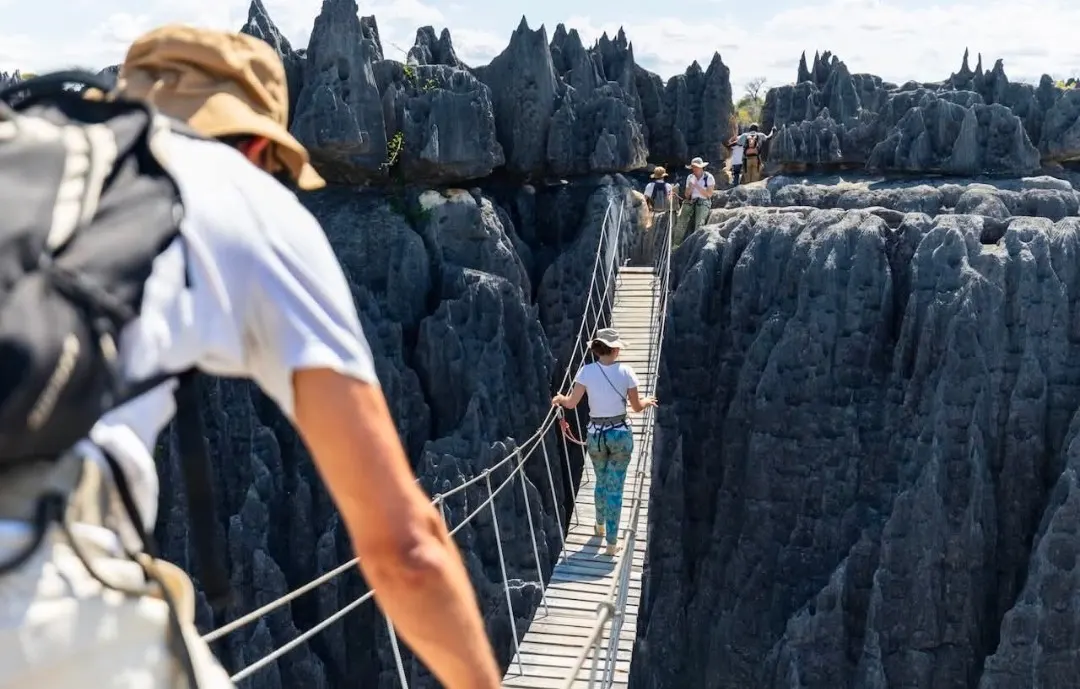
In the morning, explore the Big Tsingy while temperatures are cooler. This is the more adventurous circuit, with limestone corridors, ladders, viewpoints, safety harness sections, narrow passages, and suspension bridges. The scenery is dramatic and unique, with sharp limestone formations rising like a stone forest.
After lunch and a short rest, continue with the Small Tsingy in the afternoon. This circuit is generally shorter and less demanding, making it a good complement to the morning visit. It still offers beautiful limestone formations, dry-forest pockets, viewpoints, and a different perspective on the karst landscape.
Accommodation: Orchidée du Bemaraha, Olympe du Bemaraha, or similar
After breakfast, leave Bekopaka and drive south toward Kirindy Reserve. The journey follows rough tracks and ferry crossings, so the pace depends on road and river conditions.
Kirindy is one of the best dry-forest reserves in western Madagascar. It is especially interesting because it offers both nocturnal and daytime wildlife experiences.
Arrive in the afternoon if conditions allow. After check-in, join a guided night walk to search for mouse lemurs, sportive lemurs, chameleons, geckos, insects, night birds, and other nocturnal species.
Accommodation: Relais du Kirindy or similar
Begin with a guided morning walk in Kirindy Reserve. The local guide will search for Fossa, Verreaux’s sifakas, red-fronted brown lemurs, birds, reptiles, baobabs, and dry-forest plants.
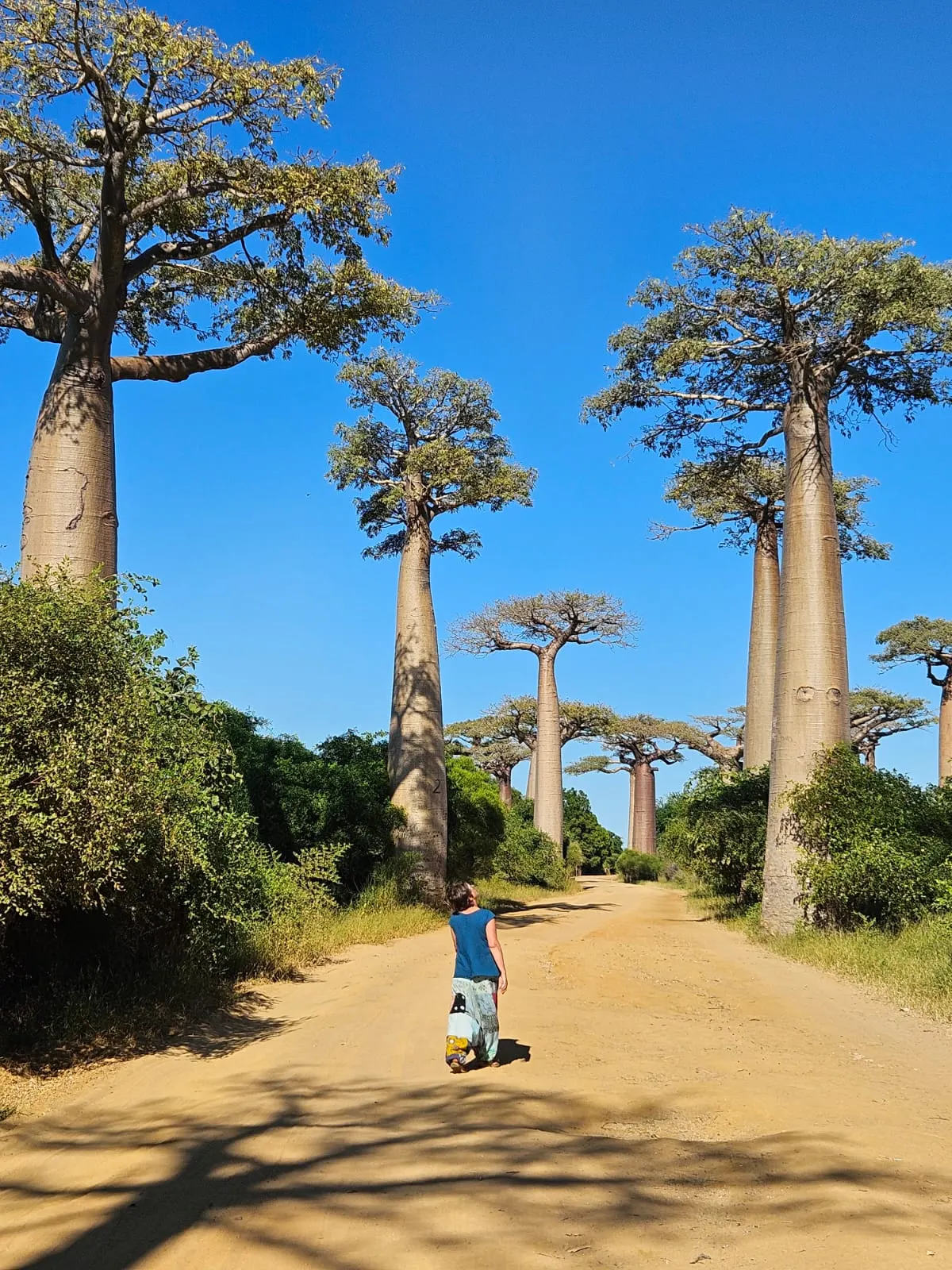
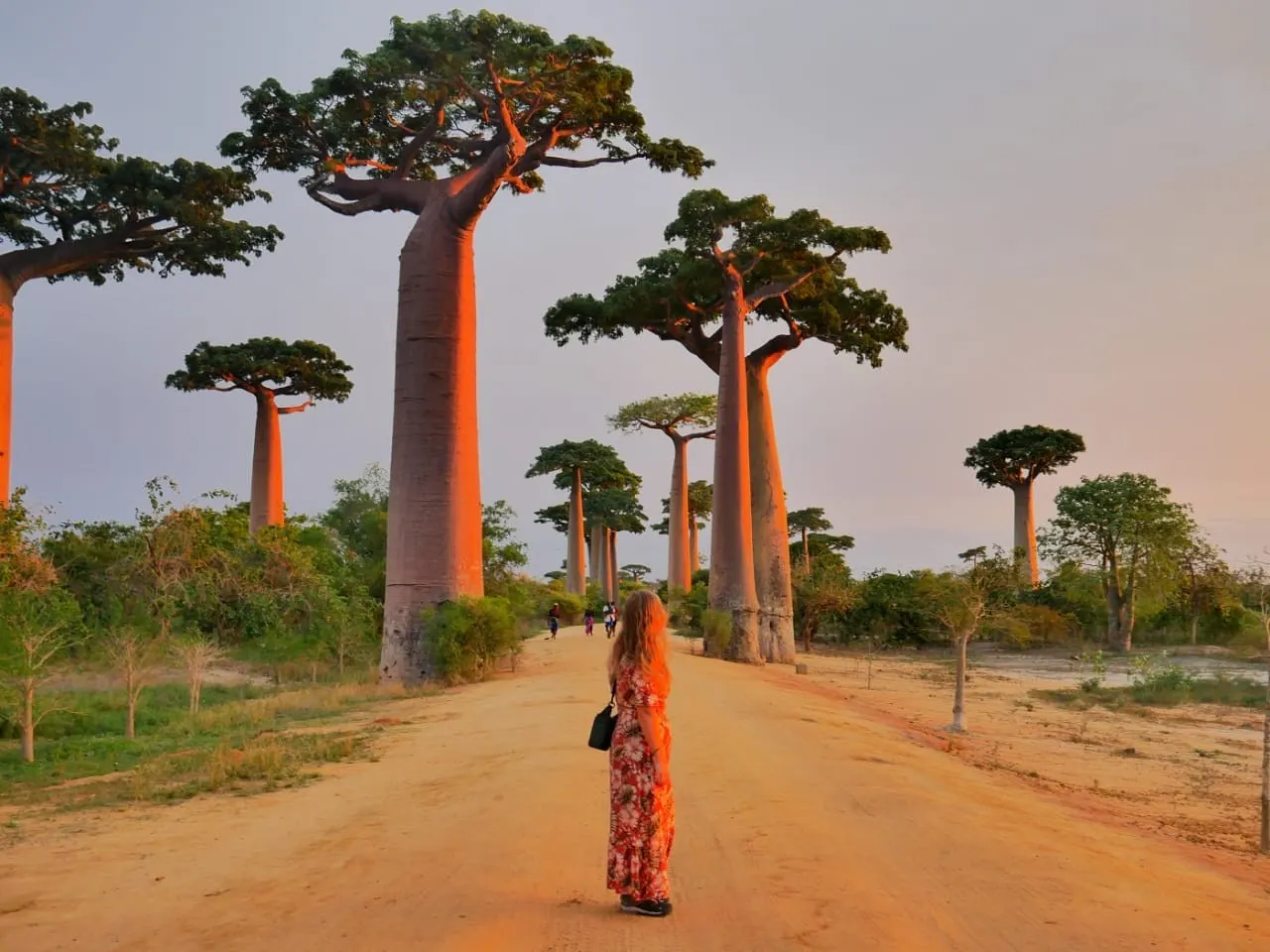
After the visit, continue toward Morondava through western dry landscapes and baobab country. The route is timed for a sunset stop at the famous Avenue of the Baobabs.
At golden hour, the giant baobabs create one of Madagascar’s most iconic views. After photos and time to enjoy the atmosphere, continue to Morondava for the night.
Accommodation: Palissandre Côte Ouest, Chez Maggie or similar
After breakfast, begin the southwest coastal expedition. Travel by 4x4 from Morondava to Belo-sur-Mer, crossing sandy tracks, salt-flat scenery, coastal vegetation, mangroves, and small villages.
Belo-sur-Mer is a peaceful coastal village known for its lagoon, fishing traditions, traditional boat-building, and calm seaside atmosphere.
On arrival, check in at the lodge and enjoy the rest of the day by the sea. This stop introduces the slower rhythm of the remote west coast.
Accommodation: Ecolodge du Menabe, Entremer maison du bout du monde (or similar)
This day is dedicated to enjoying Belo-sur-Mer properly. The program can be adapted according to tide, weather, and local availability.
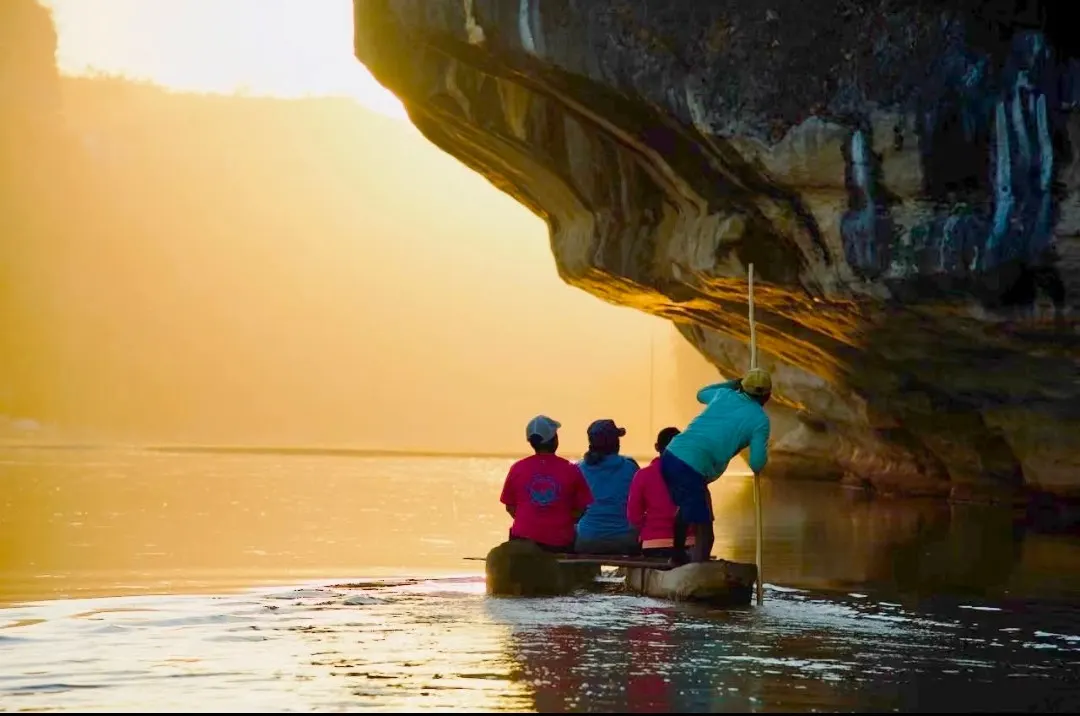
Possible activities include a village walk, visit to traditional boat-building sites, exploration of salt flats, mangrove discovery, beach relaxation, or a local pirogue excursion.
This extra day gives the itinerary more balance and allows guests to experience the coastal culture before continuing toward the more demanding tracks of Manja and Andavadoaka.
Accommodation: Ecolodge du Menabe, Entremer maison du bout du monde (or similar)
Leave Belo-sur-Mer and continue south toward Manja. This is a true expedition-style driving day through remote western Madagascar.
The route may include sandy tracks, dry plains, baobab landscapes, riverbeds, villages, and wide open countryside. Road conditions can vary, so flexibility is important.
Manja is used as a practical overnight stop between Belo-sur-Mer and the next coastal region. Accommodation is simple, but the stop is important for a safe and realistic travel rhythm.
Accommodation: Hotel Kanto or L’Hacienda or guesthouse
Depart early for the long drive toward Morombe and Andavadoaka. The journey continues through remote scenery, sandy roads, dry vegetation, and isolated villages.
After passing Morombe, continue toward Andavadoaka, one of the most beautiful coastal stops on the southwest route. The area is known for turquoise lagoon views, white sand, fishing pirogues, and peaceful village life.
After several demanding road days, Andavadoaka feels like a reward. Check in at the lodge and enjoy the beach setting.
Accommodation: Laguna Blu, Manga Lodge, or similar
After breakfast, continue south along the coastal track. This day passes through beaches, dunes, fishing villages, dry vegetation, and lagoon landscapes.
Salary Bay is one of the most beautiful coastal areas on this route and can be used as a scenic stop for photos, a beach walk, or lunch, depending on timing and road conditions.
Continue through Ifaty and Mangily before reaching Tulear, the main city of southwest Madagascar and the gateway to the deep south.
Accommodation: Bakuba Lodge, Moringa Hotel, or similar
Leave Tulear and drive south toward Tsimanampetsotsa. The route passes through dry landscapes, spiny vegetation, small villages, and semi-desert scenery.
Travel via Betioky and Beheloka before reaching the Tsimanampetsotsa area. This region feels very different from the west coast and highlands, with bright limestone scenery, spiny forest, and a saline lake ecosystem.
Depending on arrival time, a short first visit near the lake or park area may be possible.
Accommodation: Best available lodge near Tsimanampetsotsa / Ambola / Beheloka
Begin with a guided visit to Tsimanampetsotsa National Park. The park is known for its saline lake, flamingos, limestone caves, ancient baobabs, blind cave fish, spiny forest, and unique dry-country wildlife.
The landscape is one of the most unusual in Madagascar, with strong contrast between pale limestone, blue lake water, salt edges, and strange spiny forest plants.
After the park visit, continue south toward Itampolo, a remote coastal village with wide beaches and a quiet atmosphere.
Accommodation: Sud Sud, Chez Katia, or best available lodge
Continue along remote southern tracks toward Lavanono. This is one of the wildest sections of the itinerary, crossing isolated landscapes, fishing villages, sandy roads, and dry southern scenery.
The drive can be long and adventurous, but the feeling of remoteness is exceptional. This region receives fewer visitors than the classic routes and offers a real expedition atmosphere.
Arrive in Lavanono, known for its wild beach, strong ocean mood, and end-of-the-world feeling.
Accommodation: Lavanono Lodge or best available lodge
After breakfast, continue toward Cap Sainte Marie, the far southern region of Madagascar. This area is known for dramatic coastal scenery, strong winds, dry vegetation, and the feeling of reaching the edge of the island.
A visit can be arranged around Cap Sainte Marie Reserve depending on access and timing. The area may offer coastal cliffs, southern landscapes, and protected wildlife such as radiated tortoises.
Continue toward Faux Cap for the night. Accommodation is simple, but this stop is important before crossing toward Berenty and Andohahela.
Accommodation: Best available local lodge or guesthouse
Leave Faux Cap and drive east through the deep south. The route passes through Tsiombe, Ambovombe, and Amboasary before reaching Berenty Reserve.
This is a long road day through dry southern landscapes, cactus-like vegetation, sisal plantations, local villages, and open plains. The scenery gives travelers a strong impression of Madagascar’s far south.
Arrive at Berenty and check in at the lodge. Depending on arrival time, a short first walk near the lodge may be possible.
Accommodation: Berenty Lodge
Start the morning with a guided visit of Berenty Reserve. This reserve is one of Madagascar’s best-known places for observing ring-tailed lemurs and Verreaux’s sifakas.
The sifakas are famous for their sideways dancing movement on the ground. The reserve also protects gallery forest, dry forest, birds, reptiles, and southern plants.
After the visit, continue toward the Andohahela area. The landscape begins to change from dry southern plains toward greener mountain scenery closer to Fort Dauphin.
Accommodation: Best available ecolodge or accommodation near Andohahela
Today is dedicated to Andohahela National Park, one of southern Madagascar’s most interesting protected areas. The park is special because it protects several ecosystems, including humid forest, transitional forest, dry forest, mountains, rivers, and southern vegetation.
The visit depends on the accessible sector, weather, and road conditions. A guided walk may include forest trails, viewpoints, endemic plants, birds, reptiles, and possible lemur sightings.
Andohahela creates a beautiful contrast after the dry south and adds an important national park experience before reaching Fort Dauphin.
Accommodation: Best available ecolodge or accommodation near Andohahela
After breakfast, leave the Andohahela area and drive toward Fort Dauphin, also known as Tôlanaro. The road brings travelers closer to the southeast coast, where mountains, ocean, and green landscapes meet.
Fort Dauphin is one of Madagascar’s most scenic coastal towns, with beaches, bays, hills, and viewpoints. After many remote expedition days, the town offers a more comfortable and relaxed atmosphere.
On arrival, check in at the hotel. The afternoon can be kept easy, with time for a beach walk, city orientation, or rest.
Accommodation: Talinjoo Hotel, Croix du Sud, Le Dauphin, or similar
This day is dedicated to activities around Fort Dauphin. The program can be adapted depending on guest interest, weather, and local availability.
Possible activities include Libanona Beach, a viewpoint over the bay, the local market, Nahampoana Reserve, Sainte Luce area, or another coastal excursion.
This activity day gives guests time to enjoy Fort Dauphin properly instead of using it only as a transit point.
Accommodation: Talinjoo Hotel, Croix du Sud, Le Dauphin, or similar
After breakfast, depart from Fort Dauphin toward Manakara by overland road transfer with 4x4 support. This connection depends on road conditions, weather and local logistics, so flexibility is important.
This is a long expedition transfer linking the southeast coast with Manakara, passing through changing landscapes, villages and remote road sections.
Arrive in Manakara, a relaxed town on Madagascar’s southeast coast, and check in at the hotel.
Accommodation: Parthenay Club, Antemoro Hotel, La Vanille, or similar
Today is dedicated to discovering Manakara and the southeast coast. The atmosphere here is greener, more humid, and more tropical than the deep south.
A classic activity can include a boat excursion on the Pangalanes Canal, where guests observe local villages, fishermen, vegetation, and daily life along the water. Depending on timing, the visit may also include the market, beach area, plantations, or Antemoro cultural elements.
This day creates a calm transition between the southern expedition and the highland return toward Fianarantsoa.
Accommodation: Parthenay Club, Antemoro Hotel, La Vanille, or similar
Today the route continues from Manakara to Fianarantsoa. This section can be done either by train or by car.
The train is one of Madagascar’s classic travel experiences, climbing from the humid southeast coast toward the central highlands through villages, plantations, bridges, rainforest scenery, and mountain landscapes. It is scenic and authentic, but can be slow and unpredictable.
The car option is more flexible and practical. It gives better control of timing and is recommended if the train schedule is not convenient or if guests prefer a more predictable travel day. On arrival, check in at the hotel in Fianarantsoa.
Accommodation: Tsara Guest House, Zomatel, or similar
Leave Fianarantsoa and drive north along the RN7. The road passes through highland scenery, rice terraces, villages, and mountain landscapes.
A stop is made in Ambositra, famous for woodcarving and marquetry. Guests can visit local workshops where artisans produce carved boxes, furniture, sculptures, decorative panels, and traditional designs.
Continue to Antsirabe, where the cool highland climate returns. Check in and enjoy a calm evening.
Accommodation: Couleur Café, Plumeria Hotel Antsirabe, or similar
After breakfast, begin the final road journey back to Antananarivo. If time allows, a short visit can be arranged in Antsirabe before departure, such as a pousse-pousse ride, gemstone workshop, embroidery cooperative, or local craft visit.
Continue north through highland villages, rice fields, markets, and red-earth landscapes. The road becomes busier as you approach the capital.
On arrival in Antananarivo, check in at the hotel. Depending on traffic and timing, guests may visit a craft market or enjoy a panoramic viewpoint over the city.
Accommodation: Relais des Plateaux, Palissandre Hotel or similar
After breakfast, transfer to Ivato International Airport for the international departure flight.
If the flight is later in the day, a short city visit or last-minute shopping stop can be arranged depending on traffic and timing.
The expedition ends after crossing the highlands, Morondava, Tsingy de Bemaraha, Kirindy, Avenue of the Baobabs, Belo-sur-Mer, the wild southwest coast, Tsimanampetsotsa, Lavanono, Cap Sainte Marie, Berenty, Andohahela, Fort Dauphin, Manakara, Fianarantsoa, Ambositra, and Antsirabe.
Included & Excluded
Included
Private 4x4 vehicle with professional driver
Fuel covering the full tour
National accompanying guide during the full tour
All airport transfers
Accommodation in listed hotels or similar category
Daily breakfast
Certified local guides for national parks, reserves and protected sites
All park and reserve entrance fees
All ferry crossings required for the itinerary and route
Boat transfers or local crossings required for the route
Kirindy night walk and morning walk
Belo-sur-Mer activity day
Fort Dauphin activity day
Manakara activity day
Manakara to Fianarantsoa transfer by train or by car, according to the selected option
Local assistance and organization throughout the tour
All taxes
Not Included
International flights
Visa fees
Travel insurance
Lunches and dinners unless stated otherwise
Drinks and bottled water outside included meals
Personal expenses
Tips for guide, driver, local guides, boat crew, hotel staff, porters, ferry staff, train staff and local assistants
Optional activities not mentioned as included
Snorkeling equipment rental if not included
Camera fees where applicable
Photography permits or drone permits, if required
Laundry, spa, minibar and personal hotel extras
Extra costs caused by weather, road closure, ferry delay, train cancellation, boat delay, sea conditions, park closure, mechanical problem or force majeure
Private Tour Pricing
Private Tour Price
On Request — final quotation required. Prepared according to travel dates, hotel level and number of travelers.
Number of Travelers
1–16 travelers — private tour basis. Solo travelers, couples, families, friends and larger private groups can be arranged with adapted vehicles, rooms, guides and field logistics.
Main Cost Factors
Variable. Remote logistics, park access, 4x4 road sections, ferry crossings, boat transfers, sea conditions and hotel availability can affect the final price.
Availability Calendar
Best season: April to November, with the most reliable access and road conditions during the dry season. Past dates are unavailable, future dates remain available, and guaranteed departures are highlighted through the current guaranteed-departure window.
Send us your travel dates and group size. We will confirm availability, recommend the right vehicle, and prepare your private quotation for the Grand Madagascar Loop Expedition route.